Common Humanity
My life has changed dramatically since the pandemic. I became a mindfulness meditation teacher during that period of lockdown, entered into an intimate relationship with my partner Linn, and became more active in the areas of community, arts and wellbeing, all of which has shaped where I am today and how I am feeling: Alive! Throughout my adult life, writing has been a way of reminding myself over and over again what really matters: feeling a sense of safety, contenment and perhaps most of all, connection to something greater than myself, when in flow. Writing in solitude is one way and probably the easiest for me to experience a felt sense of our being more than human but interconnected and to not give in to cynicism or give up on my life as an Artivist.
“How do I know what I think, till I see what I say?”
I don’t know quite how I feel about things until I’ve written about what it is that has so moved me in the first place to pause before I react or reflect on what I did. It’s as Ursula K. Le Guin says; “a voyage of discovery resulting in something I didn’t know until I wrote about it.”
I have gone on many a journey: been there, been still and here I am, back again. It’s good to be home after many an adventure and I want to take the time to write and reflect on my thoughts about what has happened in these last few years, to enable me to recognise and make sense of my own emotional narrative, so as to not remain over-attached to the past but be able to respond, let go and “learn from it”, as my mother would say.
It feels like coming to the end of a long process of recovery from often, quite traumatic experiences, after writing, replaying and representing them, time and time again in an attempt to try and understand the macro in the micro of my lived experiences as part of the human condition in a local and global context shaped by people in environment strange yet curiously familiar to me when I remove the cultural barriers of beliefs and judgments about how we’re supposed to be and instead recognise that just like me this person, or sentient being, wants to feel safe enough in themselves to trust me to share their story.
Perhaps it’s because I feel safe and courageous enough to move on as I disclose rather than repeatedly looking back and reminding myself of past pain and suffering, as a way to avoid the threat of ever having to feel the potential hurt and heal, as my heart begins to crack open and trust in love again. But mostly what’s been helping me to move on even as I revisit old haunts with nostalgia is self-compassion: Recognising and allowing myself to shed some tears of grief, even laughter, and smile at the folly of my selfish passions, revealing thoughts and feelings without really knowing what it feels like to believe in myself. Afraid to let others know why I don’t feel I am myself with them. Afraid to be, not because of a lack of love or feelings but how to approach them that’s been keeping myself at a safe distance from revealing thoughts and feelings, despite all the reasons and wisdom and relief when I do so in the end.
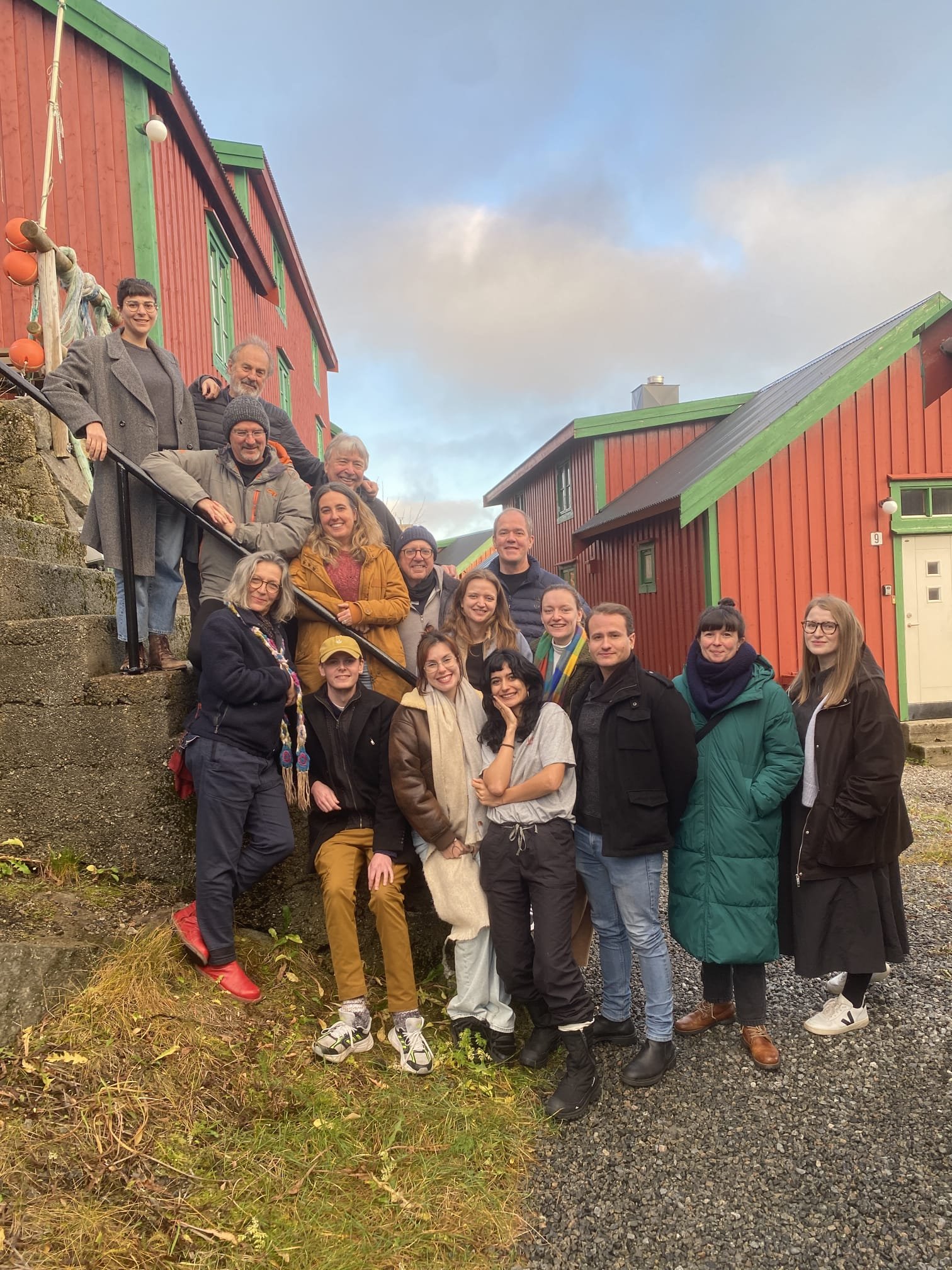
Norway: Moving Matters
The following is a brief synopsis of some of the things I experienced in relation to community, arts and wellbeing, relating to my role as the mentor of the wellbeing program in a European Project called Moving Matters, https://www.movingmatters.eu/ which has played a significant role in shaping the last three years of of my life and my view on community, arts and wellbeing as a whole. I entered into this project with The Non Prophet Organisation:
The Non Prophet Organisation,(NPO) which James Veldon, Linn Thorstensson and I co-facilitate, I was dipping back into International Arts, after having experienced a sense of disillusionment, working on other European projects and within performing arts, in general. So, when yet another example of the exclusion happened to participants in a Perform Europe project by other members of the network, AREA, whihc Cristina and Silvia from https://www.eilertsen-granados.com/ and I from The Non Prophet Organisation (NPO) had been part of, we set up a community, arts and well-being focus group. This subsequently led to the inclusion of NPO in the Moving Matters project, which, to my mind, is built on these three foundational pillars: Community, Arts & Wellbeing. Without these three being of equal measure what we’re trying to build will not be sustainable.
Moving Matters was made up of partner organisations from Norway; Serbia/Hungary; The Canary Islands/Spain and Ireland: E&G; Nyari Mozi, LAV, and NPO, among other independent mentors and organisations. It’s about supporting arts in rural areas in a more ethically sustainable way. The challenge has been to build a working relationship, in a mostly online context, and to move when it matters for the practice-based aspects of co-creation and public performances.
My primary intention as the wellbeing mentor was to influence creativity in a rural context through wellbeing practices, such as mindfulness; meditation; compassion; non-violent communication; gratitude; and help all concerned to deal with stress, anxiety and sense of isolation or separateness living on the periphery of Europe. Also, for participants to see community, arts and wellbeing as a process, not a destination, that requires disciplined practice to build. Wellbeing practices are there to support our level of patience and tolerance, build our resilience in the face of resistance to our ongoing journey toward self-actualisation and to move beyond our self-limiting egocentric selves.
Practicing wellbeing has led me to look at my deepest intentions as a creative artist and a mentor, which is to be the change I want to see in the development of community, arts and wellbeing. I provide the tools and skillful means to practice wellbeing, which I feel in time established and emerging artists may come to appreciate. However, whether or not others emulate these self-care practices is beyond anyone’s control. As practitioners we can only hope that our creativity and presence has a positive effect on the overall creative process. In the arts this is an ongoing journey and we’re not quite there yet, or aware that we’re not aware yet. However, I am hopeful. It takes courage, commitment and self-compassion to achieve an embodied sense of connection with others in a world where we’re mostly in our heads, lost in thought, and living with uncertainy about the future.
I felt the emerging artists in this particular project understood the importance of self-care, even more so than us mentors, who being that bit warier, have found it harder to overcome that mindset of scarcity prevalent in the leisure industry. We all need to practice wellbeing regularly for it to become habitual and seem natural especially if our lived experience of working in the arts has been shaped by scarcity and competitivenss. Is it any wonder we prioritise competitive struggle to survive over collaboration and the wellbeing of one another when that has been the narrative we’ve grown up with and which Europe continues to pursue:
“Ireland will assume the Presidency from July, a critical time when much policy is due to be finalised at EU level. Negotiations on the EU's next seven-year budget, the Multiannual Financial Framework, will be in the final stages, while various strategic initiatives concerning competitiveness and capital markets, and the rapidly-evolving geopolitical environment are set to dominate the agenda.
“Ireland will take up the Presidency at a time when Europe faces huge challenges but also huge opportunities. Above all, competitiveness must be the guiding theme. If Europe wants to deliver jobs, growth and security for its citizens, we must lower energy costs, cut red tape, deepen our single market, and unlock investment across the Union”, said Seán Kelly MEP and Leader of Fine Gael in the European Parliament.”
(https://www.mayonews.ie/news/local-news/1979609/fine-gael-mep-s-outline-priorities-for-ireland-s-eu-presidency-in-july.html)
Our culture and knowledge shapes our way of being and the stories we tell ourselves regarding what Life is. It certainly is not about competitiveness, if we all stand to win is further destruction of our planet because of poor leadership whom we choose to follow. I wish bring to insight, self-compassion and resilience techniques and tools to support us on our journey of rediscovery of our common humanity, which is really just the tip of the ice-berg in terms of what we can do to take better care of ourselves and the rest of the planet. But most of all I want to embody these practices through my artisitc or creative presence and the art of living among you and sharing my stories and cultural experiences that have shaped my narrative.
My involvement in Moving Matters, as I said earlier, came out of a failed collaboration, which ironically turned out to be a blessing in disguise. I learned about the importance of not remaining silent when a partners’ behaviour seems ethically wrong. Often there’s a fear to speak truth to perceived power, even though power over others, is really only weakness disguised as strenght. It takes patience, courage and compassion to be yourself, but if you’re not you’re living your life according to someone else.
Working alongside cultural workers from different disciplines has given me a broader understanding of just how challenging and rewarding it can be to work and play in a multicultural context. Moreover, why it is important to value every aspect of the creative process, the vast amount of time and energy required emerging as an artist: Had I known how much bureaucracy, administration and online meetings were involved in this project at the outset I’m not sure I would have gone on this adventure. But this is also part of the process and which in time will be less onerous as we learn to trust one another.
That is why the wellbeing aspect of Moving Matters, or any project for that matter, is a vital and necessary component of how we engage as a whole and could be even more so, if we were not so caught up in that mindset of scarcity that is stifling creativity, limiting our capacity to recognise our common humanity, to practice self-compassion, be generous in our sharing and empathic in how we relate to one another.
Mindlfulness is not something to be practiced or seen as a means to selfish ends but for the wellbeing of all. Nor should it be measured in terms of its market value and certainly not delivered as a product or service where one size fits all. It brings unique value to your life in immeasurable ways, but you actually have to practice! No one can do it for you, or know what it’s like to feel fully present, in mind and body. Most of the time we’re not here to see ourselves in all beings and sense all being as one.
Being present and in-person, in particular on a one-to-one with the emerging artists and mentors, was more beneficial than all the group or online sessions in general over the whole period of Moving Matters, which is soon to come to an end. What remains to do is create our toolkit for others to learn from our experience of arts in rural areas, based on our reflections.
The highlight for me was the retreat in Ireland, because it was such a successful collaboration between The Non Prophet Organisation, my partner Linn and I, with other local facilitators and the emerging artists. The reason being a balance of practice, rest and play, leading to genuine empathy and connection by intentionally pausing and spending time together. As the emerging artists said themselves; it would have greatly benefited all the mentors to have been part of it or for us to have had our own retreat at the outset to get to know each other, our creative practices and methodologies, as we didn’t dedicate enough time to this for the wellbeing of the project and our own participation as a whole. That’s what happens when we live in a market culture, where time is money and we feel time poor, due to a mindset of scarcity.
I think the main reason being present to be creative is challenging is that we are more driven than driving in a mediated world and not of our own interpretation. A world where environment, human and natural resources play second-fiddle to market forces that shape our cultures’ narratives of how we should work and play on this planet we depend on for our existence. Life is what we are; made conscious of itself through the art of living. Expressing our creativity and presence in this world as humans being not just doing. But because we feel time poor, we don’t always take the necessary time to incorporate wellbeing into how and what we create or establish sustainable and healthy objectives for ourselves: ways for us to engage in the world based on our common humanity and core values.
Wellbeing in the arts is about building that creative capacity and recognising that common humanity in all we say and do. It’s more about building social capital, about qualitative rather than quantifiable outcomes: a quality of life available to all if we practice mindful not mindless creativity. In brief, steps need to be taken from the top down and bottom up and implemented at the outset of any creative journey or process to ensure we’re not just participating for the sake of art itself, but because we believe in the power of community, arts and wellbeing, embodied by us, and there to serve all, if we are willing to listen and put the wellbeing of our planet first.
The greatest challenges I have found is in creating a sense of trust in this narrative myself, especially when among artists who are also time poor and overstretched due to systemic privilege, rather than a lack of resources. The digitisation of Europe is in some ways reducing creatives time, energy and resources, because in an individualist culture with a scarcity mindset, we feel like we have to do it all ourselves, multitasking and participating in too many projects that often don’t fully cover the costs, or value the amount we put in just allowing our imagination to come up with a utopian scheme. We ourselves sometimes undervalue our services or feel we have no choice but to accept the terms offered albeit in good faith to us, though in hindsight some of the things I’ve done for the sake of my career or mammon have been a disservice to my ideal of life as an “artivist” serving community, arts and wellbeing.
Looking after one’s wellbeing seems to some a luxury rather than a necessity. For example, online sessions lacked participant’s presence and absenteeism from meetings was problematic, leading to resentment. This could have been avoided if participants were paid to attend the sessions and were present rather than multitasking. If people working in these European projects and the arts in general were given a living wage, as successfully piloted in Ireland, it would allow them to focus on one project and complete it to the best of their ability rather than spreading themselves to thin to make ends meet, overpromisiing on deliverables, and ticking boxes, so it looks good on paper, while appearing grateful and gracious like a swan, calmly just drifting along, while constantly paddle beneath the surface to keep it all together.
Most people working in the arts and leisure industry are constantly looking ahead, competing for limited funding, without taking enough time to reflect, rest and play, which is not good for one’s wellbeing, creativity and society at large. Trying to be a Jack of all trades leads to being a master of none, which is what most artists have to do, leading to burnout. We often don’t share our thoughts and feelings openly because we’re afraid of the consequences and yet our silence does not protect us. Instead it makes us complicit in our playing small and not taking our own health and wellbeing seriously. With a greater level of financial safety, creative satisfaction and real connection we would overcome personal and cultural barriers. This was evident in our project, despite our best intentions. And due to overwhelming demands on the participants' time I decided to reduce the emerging artists’ homework or practical tasks, such as sending regular written feedback from each session and updating their reflection journals daily reports, as I sensed their resources were limited and energy depleted. You can’t force people to be mindful or “be free”, as Rousseau puts it, if they are running on empty. You need reserves of energy to be creative and compassionate towards oneself and others when times are challenging. Thus you need to pause and take time out to be aware of what your body and mind needs. There is far too much noise in most arts pratitioners' heads for us to sit in meditation and reflect on our behaviour.
“There is a pervasive form of contemporary violence to which the idealist most easily succumbs: activism and overwork. The rush and pressure of modern life are a form, perhaps the most common form, of its innate violence. To allow oneself to be carried away by a multitude of conflicting concerns, to surrender to too many demands, to commit oneself to too many projects, to want to help everyone in everything, is to succumb to violence. The frenzy of our activism neutralizes our work for peace. It destroys our own inner capacity for peace. It destroys the fruitfulness of our own work, because it kills the root of inner wisdom which makes work fruitful.”
― Thomas Merton, Conjectures of a Guilty Bystander
The best we could do was to check in with them, offer some skillful means to cope and give ourselves some time and space to talk, laugh and cry, share our concerns, vent our frustrations with the world at times, and remind ourselves to see the bigger picture in on our shared journey towards rediscovering our authenticity in the market place. Hopefully without selling ourselves short.
The eligibility criteria from Europe shapes how projects must be delivered, based on predetermined desired outcomes, which leaves limited room for flexibility once these deliverables have been agreed upon and the contract signed. At least this was our experience in regards to how the wellbeing program online had to be run. This is no different locally, only with slightly less bureaucracy.
Without artists to fulfil the role of arts in society there would be no project, limited entertainment and creative innovation. And yet we had limited time to be with the emerging artists, see and hear their creative voices and choices, which was central to the project. They were not part of the design and decision making process until we as mentors were made aware that our approach wasn’t always working for them. Though we had already decided to some extent what was going to be the wellbeing program, we had to rethink and try to adapt our sessions without entirely relinquishing the foundations of mindfulness and wellbeing practices, whether or not they were engaging with them in the way we would have liked.
We lost participants along the way and had to replace them because these participants prioritised what was personally and professionally more rewarding for them. We understand that this is partly because of other priorities in the participants’ lives, partly because our way of mentoring didn’t always appeal to them and partly because we are all subservient to market forces, which shapes how we see ourselves: mostly as independent self-sufficient creatures, which is a fallacy:
We need to have a felt sense of our inter-dependence and while we may understand that at an intellectual level, we are not slowing down enough to reduce our carbon footprint, the number of hours we work or question; “how come with all this connectivity and time saving technology we feel more isolated, time poor and anxious about the future of our world than ever before?”
The performances by the emerging artists at the final showcase did offer signs of self-awareness of the ridiculousness of the hegemony and we can only hope that they will remain true to themselves while holding a mirror up to our society, as the storytellers of the future. We can’t dismantle the master’s house with the master’s tools of technology but we can use them in ways that may serve society at large, which is why online material made readily available to all may in time serve, as we retrace the steps that got us here in the first place. But we need to not only live in the present, but imagine a brighter future to create it.
You can’t design a future product or service without the end user’s input. For arts in rural areas to have a positive influence in shaping community, arts and wellbeing participants must be part of the design process and already have an idea what they are commiting to and why it is important to practice and follow through on this commitment for the mutual benefit of themselves and other participants, as well as the wider community they wish to engage with as empathic emerging artists.
To be a creatively mindful artist influencing the story of humanity there needs to be an adequate level of safety and connection within rural communities to shape policies at large based on altruistic rather than self-centred ends. Artists work in an under-funded extremely competitive environment that does not nurture our creative wellbeing and thus it is hard to treat others as one would like to be treated because we’re not taught to think about the greater good or overall wellbeing of our community but learn how to survive in this dysfunctional system.
At what stage the mentors and emerging artists could be involved depends in shaping a program that incorporates wellbeing into their creative practices to ensure their creartive are actually beneficial to the wellbeing of rural communities and the public at large at the moment very much depends on the willingness of everyone to work for free and dedicate hours each week to putting into practice what I shared with the participants. This is not a luxury most of us artists can afford, unless we can earn a living from it or elsewhere at the same time. What I am doing is incorporating wellbeing into my life as an artist and showing to the world how it can support community, arts and wellbeing without having to sacrifice my core values or prostitute myself or my artistic values and practices to appeal to popular culture or the market place. Were I to dedicate myself fulltime to my artistic practices my wellbeing would suffer and I don’t think I would be as empathetic or enjoy being creative and part of a rural arts community in the way I do. I hope that what I pracitce and shared with the participants will give them food for thought when it comes to their own creativity.
I’ve certainly learned to cope better with interpersonal and intrapersonal conflicts due to working with these participants in Moving Matters, who are much more caught up in the leisure industry and performing arts than I am, out of necessity. Having the capacity to pause and actively listen has led to more effective communication skills, clearer personal boundaries and greater resilience to go on practicing and creating in a professional capacity. Seeking peer support to explore common fears including my own impostor syndrome as a performing artists and wellbeing facilitator have been critical steps in overcoming perfectionist tendencies, and people-pleasing.
This project has also been about learning to work in a multicultural team and online context: It has obliged our arts organisation to set up as a company limited by guarantee and acquire resource management skills to better value services rendered. It has also given me the opportunity to put into practice with local artists some of the learning from this project in relation to how to manage group dynamics. I’m really looking forward to working with our toolkit for the support of Arts in rural areas, such as our own.
The wellbeing program and project as a whole would have benefited from an in-person retreat and wellbeing sessions at the outset including all stakeholders in the design and decision making processes would encourage more active participation. Which is why when we do this again I’ll be insisting they take time to pause and appreciate the west of Ireland.
You can’t leave one’s health and wellbeing to chance and health really is wealth, as we know from the toll this project has taken on us. There are things we could have done at the outset to avoid some of the stress and conflict. Having a social and written contract among participants, ensuring full participation, with adequate financial compensation and reparation if partners are not fulfilling their part of the agreement. Risk and conflict management agreements and procedures are necessary, especially if someone is unable to continue for reasons beyond their control. It’s really asking ourselves what if this happens what do we do and agreeing to it beforehand. Participation of everybody in the wellbeing program and not just the mentors and emerging artists and more time allocated to it with each group in their respective countries would have greatly enhanced the overall objectives of creating cohesion and trust among us because it takes patience and tolerance to bridge the generation gap, lived experiences and cultural difference, not to mention ways of working and playing. Wellbeing is not a box you can tick or a process you can rush. It takes many, many rounds, sometimes over many, many years to wake up to the conditions under which love was given to us and to forgive and love unconditionally.
Conclusions:
As the wellbeing mentor some participants seemed to think I should address interpersonal and intrapersonal conflicts and people’s thoughts and feelings about wellbeing in general, which I did by normalising these emotions and letting everyone present know that it is perfectly natural to feel anxious, nervous and uncertain about embarking on a two-year project and process, for the first time, which is the case for most of us. It’s also perfectly natural that conflict as well as harmony will be part of such a process at different times. I can safely say we had both and despite the odd hiccup as a group we handled it quite well. Learning along the way when to WAIT (why am I talking) and LISTEN.
Something to be aware of in situations where people are sharing and all the attention is on them, is to try and bring it back to the group dynamic while respecting everyone’s individual feelings on this journey. What can easily happen is that we can feel special as the mentor or participant and all the focus and attention is on us: our creativity, our problems and the solutions offered by the group is to try and listen as we’re here to support one another, not fix us. We can’t always resolve professionanl or personal issues and make them go away as quickly as possible or brush over them or say we’ll cross that bridge when we come to it. Just listen and empathise with the person. I think we’re seeing how important this is with the breakdown of communication among our political leaders, which can be so frustrating when we seem to be going over and over the same issues again and again and not learning from past mistakes.
The hardest thing to do is just be supportive by actively listening with empathy and reflecting back to the person what you’ve just observed and heard. Maybe making a suggestion based on one’s own lived-experience in this supporting role and one’s intuition in relation to what one is observing, feeling, and what we think and suggest may serve. Also it’s important to ask for permission rather than giving unsolicited advice. This is something I’m learning as a mentor based on being in situations where I feel that my own or another person’s needs are not being met by the group or a person who’s trying to help but actually more a hindrance in this situation. It’s important to listen and take on board what others say, though you don’t necessarily have to agree with them or follow their advice or doubt your own experience.
I have a tendency of trying to please or appease others by not offending them or openly disagreeing with them or calling them out in public when I think they are wrong. Others have done so and it usually creates a level of reactivity or resentment. I don’t like when others judge me or my performance, particularly if I perceive it as negative. It may be constructive criticism from their perspective but from another’s point of view it comes across as telling them how they should play their role or do their job. As mentors and peers we need to be aware of this and part of my role is to know how and when to approach someone respecting myself and other’s feelings. It takes:
Practice, Practice, Practice…
The most challenging aspect of mindfulness for most of us is maintaining a meditation practice when on our own and other things in our lives are prioritised or take precedence. It’s challenging because we’re easily distracted by our thoughts and sensations in our bodies. When we’re tired, sitting still is difficult and I observed this with the participants.
Face to face contact is important, as well as the environment and that the participants are there because they want to be and not because they have to be. I would have preferred to be in a tech-free zone with no cameras or phones or other distractions. You work with what you have and how people are feeling. And there’s room for improvement on how we arrange these sessions in the future.
Finally, it’s important to dwell as much on the positive as we do on the negative, which we’re not really wired to do. It takes practice to absorb and “take in the good” and instill the wonderful experiences over this two year process into our memory banks. What I appreciated was the welcome I received from the host countires: The taste of their food, the sound of their language, the beauty of their smiles and seeing them come alive in their practices. These are what keep us going, striving not for perfection but to be the best we can. We’re all doing the best we can, given our circumstances and that’s all we ask of each other: Be the best and most authenic person you can and the rest will follow, as sure as night follows day.
Mucho Metta